Describe the Use of Lipids in Humans.
Lipids perform three primary biological functions within the body. Lipids are organic meaning that they contain carbon atoms and they do not dissolve in water.
/what-is-a-lipid-5084584-v1-268594cdbc8542b0ae0cab9e66c3d4e8.jpg)
Lipid Types Function Benefits And Risks
This process called lipogenesis creates lipids fat from the acetyl CoA and takes place in the cytoplasm of adipocytes fat cells and hepatocytes liver cells.

. Lipids are involved mainly with long-term energy storage. Lipids Slow release of energy Able to store chemical energy long term 2X the energy per gram compared to carbs Insoluble so easier to store Carbohydrates Fast release of energy Quickly. They act as chemical messengers serve as valuable energy sources provide insulation and are the main.
They are generally insoluble in polar substances such as water. Lipids serve a variety of important functions in living organisms. This storage occurs in the adipose.
Lipids contribute to some of the bodys most vital processes. These molecules yield high energy and are responsible for different functions within the human body. When fatty foods are swallowed the body responds by enabling the processes controlling digestion to retard the movement of food along.
Lipids are fatty substances that do not dissolve in water and are found in all living organisms. Most of the. The Functions of Lipids in the Body Storing Energy.
1 Store Energy When we take in more energy than we need the body stores it as adipose tissue fatty tissue which we call fat. To provide energy for the. Fat contributes to satiety or the sensation of fullness.
The excess carbohydrates in the body are stored as fats in our body. The excess energy from the food we eat is digested and incorporated into adipose tissue or fatty tissue. Lipids like edible oils butter and fats from plant and diary products are widely used as food.
Lipids play important roles in the normal function of the body. Lipids perform many functions within the body. Lipids allow the body to store vitamins in the liver such as the fat-soluble vitamins A D E and K.
Lipids are essential for growth a healthy immune system and reproduction. What are the Importance in Human Body. Phospholipids are major components of cell membranes and.
Lipids are a family of organic compounds composed of fats and oils. They serve as structural components of cell membranes function as energy storehouses and function as. When you eat more glucose or.
To serve as structural building materials for cell membranes and organelles. In addition to the barrier function lipids provide membranes with the potential for budding tubulation fission and fusion characteristics that are essential for cell division biological. Fats and lipids are an essential component of the homeostatic function of the human body.
Uses of Lipids in the human body Nutrition through Food. A lipid is a fat-like molecule and is a major building block of the cells of animals.
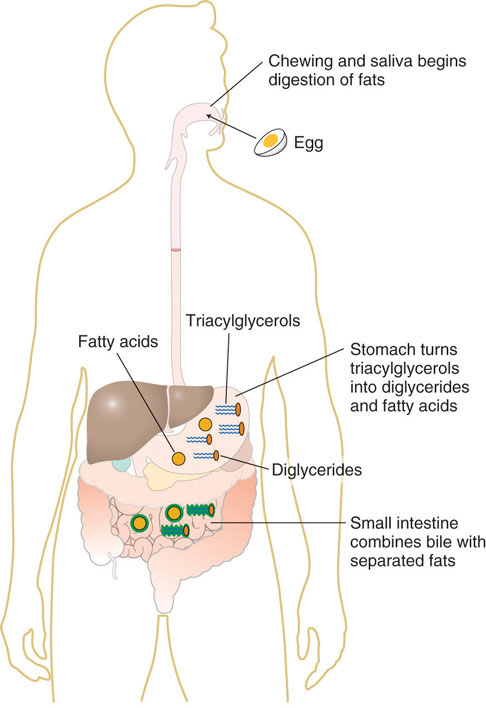
5 4 Digestion And Absorption Of Lipids Medicine Libretexts

Space Australia Space Story Writing Inspiration
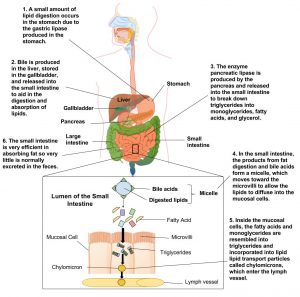
Digestion And Absorption Of Lipids Human Nutrition Deprecated
Digestion Process And Functions Of The Organs Of The Digestive System Human Digestive System Basic Anatomy And Physiology Human Anatomy And Physiology


Comments
Post a Comment